Trending today
Popular movies
Popular TV
Top rated movies
Trending today
Popular movies
Popular TV
Top rated movies
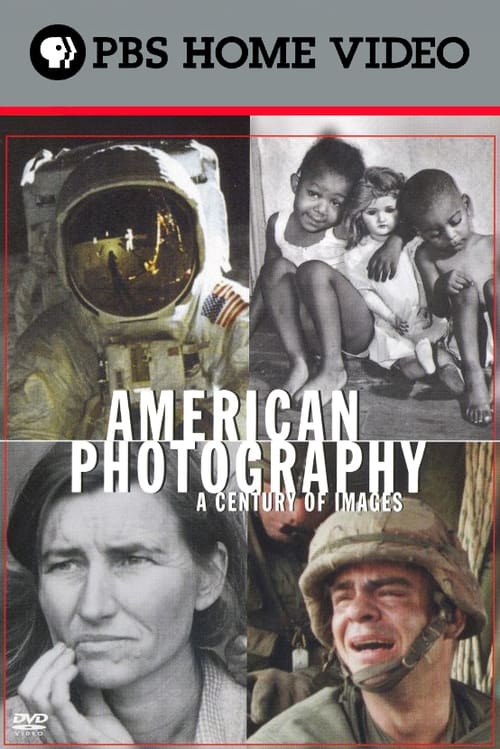
Three-part series exploring the impact that photography has had on American life in the twentieth century. The story of pictures we have taken and where they have taken us.
Jump into any season
First episodes — open an episode to play
The Developing Image, 1900-1934
56 min
Inexpensive hand-held cameras gave ordinary people the opportunity to create their own visual images. Suddenly pictures were a part of our daily lives: on passports, postcards, in the developing picture press, and in science. World War I photographs even convinced many reluctant Americans that they had a stake in this distant war, and advertisers embraced photography because of its ability to create a fantasy that seemed to be a plausible reality. By the end of the 1920s, photographs—little flat pictures that came to represent the truth—had made their way into virtually every corner of contemporary life.
The Photographic Age, 1935-59
56 min
Mass media devoted to distributing photographic images emerge. Magazines like Life and Look—dedicated to telling stories, primarily through photographs—grew rapidly in popularity. An Associated Press “wire photo” could be sent anywhere instantly, allowing millions of people to see the same pictures at the same time. Documentary photographers influenced Americans' view of the Depression and World War II. The consumer frenzy of the 1950s was driven by our desire to possess the images of abundance.
Shows with a similar vibe
Because you viewed this
Photography Transformed, 1960-1999
57 min
The photographic image remains dominant, factoring significantly in landmark events like the Cuban Missile crisis, the Vietnam War, and Civil Rights violence -- but challenges are rising. Television and motion pictures increasingly compete for the visual landscape. Computer technology undercuts the notion of "photographic truth" by enabling the alteration of photographs without detection.