Trending today
Popular movies
Popular TV
Top rated movies
Trending today
Popular movies
Popular TV
Top rated movies
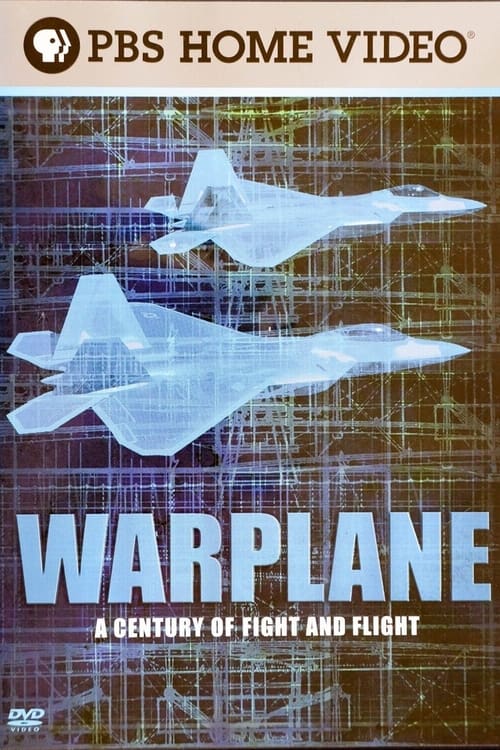
The warplane has evolved over nearly a century to become what it is today, in 2004. This series is the story of how, through life-and-death necessity, invention, ingenuity and sheer hard work that warplane technology evolved. The Warplane series is not a history of every military plane but rather a look at the major stepping stones that advanced military aviation.
Jump into any season
First episodes — open an episode to play
Airplane to Air Force
55 min
World War I ushered in the airplane's first military roles: aerial reconnaissance and artillery spotting. With aviation still in its infancy, aerial combat took longer to develop, but the evolution of fighter tactics was inevitable as planes became more sky-worthy. The results transformed combat from fly-by pot-shots to fast, furious duels. By the end of the war, the airplane had been defined as an "eye in the sky" - a role that remains as vital over the deserts of the Middle East today as it was over the trenches of France in 1914. Every country recognized the potential of the warplane, and the growing necessity to take control of the skies.
Air Force to Air Power
56 min
World War II was where national air forces came of age, where individual planes coalesced into unstoppable squadrons, and where wartime tactics were dictated from the sky down. Germany rained shells down on London, the Allies executed precision bombing raids by day and frightful carpet bombing missions by night. Pathfinders led bomber squadrons to their targets, and fighters protected other planes as they flew. By the time America dropped the atomic bomb, each airplane had its own role.
Shows with a similar vibe
Because you viewed this
Jet Age
55 min
On the heels of World War II, the jet airplane became a defining piece of mid-20th-century technology that would revolutionize existing airplane roles and create an entirely new generation of mission-specific machines. With the world in the grip of the Cold War, combat planes became faster and more agile, spy planes cruised over enemy territory at dizzying heights and dazzling speeds, and jet-powered helicopters entered military service. Designers, test pilots and combat crews took huge risks as they pushed the technological envelope, and within 58 years of Orville Wright's historic flight at Kitty Hawk, man had broken through the boundaries of both sound and space.